Knowing how to clean solar panels correctly is the difference between recovering lost production and permanently damaging the surface. The short answer: use soft tools, purified water, low water pressure, and only touch panels you can safely reach from the ground or a single low step. If your array is on a second story or a steep pitch, stop there and call a professional.
Why water type matters more than anything else
San Diego’s tap water is notoriously hard. It carries dissolved calcium and magnesium that leave white mineral deposits on glass as the water evaporates. Those spots scatter light instead of transmitting it, and they bond to the anti-reflective coating over time.
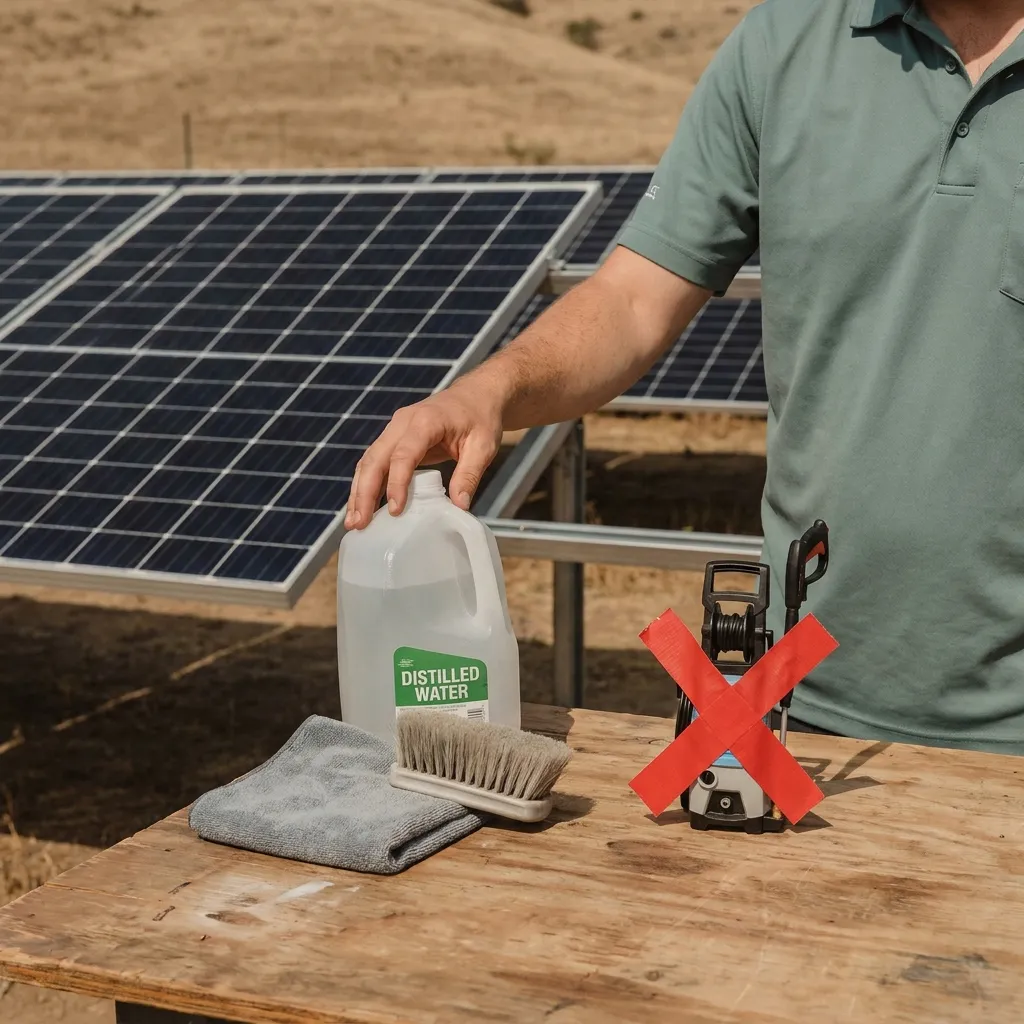
Use deionized or distilled water only. You can buy distilled water at any grocery store, or rent a deionized water tank from a janitorial supplier. Either way, rinse after washing and let the panel air-dry streak-free.
If you use tap water and mineral spots form, removing them safely requires a professional hard water stain removal process. The chemicals needed to dissolve mineral scale without scratching the coating are not sold at hardware stores. And scrubbing harder with tap water makes it worse, not better.
San Diego’s long dry season compounds this. Panels can go six months without rain, so whatever mineral residue is on the surface just keeps concentrating. That’s one reason cleaning frequency matters here more than in wetter climates. See our guide on how often to clean solar panels in San Diego for specific timing recommendations.
What tools are actually safe
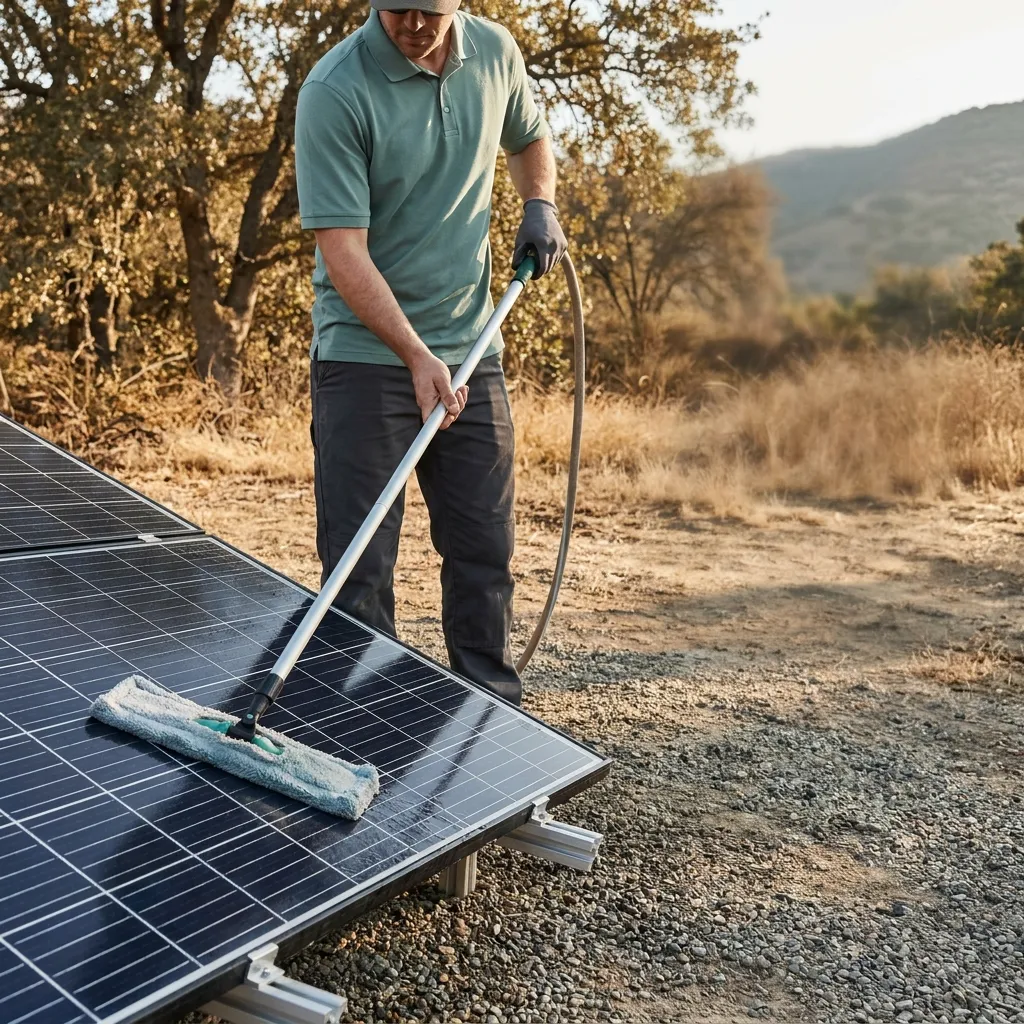
You need three things: a soft-bristle brush or microfiber pad rated for glass, a garden hose with a gentle spray nozzle, and your chosen purified water supply.
That’s it.
Do not use:
- Pressure washers (forces water past panel seals and junction boxes, can void the manufacturer warranty)
- Abrasive pads or steel wool (permanently scratch the anti-reflective coating)
- Metal scrapers or putty knives (same problem)
- Household glass cleaners with ammonia or solvents (degrades the coating over time)
- Brushes with stiff synthetic bristles (fine scratches accumulate and scatter light)
A professional soft wash cleaning uses deionized water, purpose-built brushes, and low-pressure delivery systems designed for solar glass. That’s the standard your DIY process should approximate.
Step-by-step: how to clean solar panels safely at home
This method applies only to ground-mounted systems or single-story rooftop arrays with safe, stable access. If you’re unsure about roof safety, skip to the “when to call a pro” section below.
- Check the time. Clean early morning or after sundown when the panels are cool. Hot glass plus cold water causes thermal stress and can crack tempered glass. Midday cleaning also evaporates water before you can rinse it off, leaving residue.
- Shut down or monitor the system. Check your inverter manual. Many manufacturers recommend turning off the system or switching to a maintenance mode before cleaning. Water on active electrical components isn’t inherently dangerous, but following the manufacturer’s guidance protects your warranty.
- Rinse with purified water first. A gentle stream from a hose with a low-flow nozzle removes loose dust and debris without scrubbing. Let gravity do the work.
- Apply mild soap only if needed. If there’s visible grime or light bird droppings, add a few drops of dish soap (no degreasers, no citrus solvents) to a bucket of distilled water. Wet your soft brush or microfiber pad in the soapy water and wipe gently. Work panel by panel.
- Rinse completely. Any soap residue left on the surface will attract more dust. Rinse each panel thoroughly with purified water until the runoff runs clear.
- Let it air-dry. Don’t wipe with a dry cloth. Dry cloths can deposit fibers and create fine scratches. The panels will dry streak-free on their own if you used purified water.
The warranty risk most homeowners miss
Solar panel warranties fall into two categories: product warranties (typically 10-12 years) and performance warranties (often 25 years). Both can be voided or complicated by cleaning damage.
Most major manufacturers specify in their warranty documentation that cleaning must be done with non-abrasive materials and that pressure washing voids the warranty outright. Some specify purified water requirements. If you scratch the anti-reflective coating with an abrasive pad, the panel’s output degrades permanently, and the manufacturer can argue the damage resulted from improper maintenance.
The National Renewable Energy Laboratory (NREL) has documented that soiled panels in dry climates lose 6.5% or more of their annual output. The fix is straightforward. But the method matters. You can read NREL’s research at nrel.gov.
Before you clean, download your panel’s installation and maintenance guide from the manufacturer’s website. Search for their cleaning guidelines specifically. If you can’t find them, call their support line. That document is your warranty protection.
Do’s and don’ts at a glance
| Do | Don’t |
|---|---|
| Use deionized or distilled water | Use tap water (hard water mineral deposits) |
| Clean early morning or after sundown | Clean at midday when glass is hot |
| Use a soft-bristle brush or microfiber pad | Use a pressure washer |
| Rinse before and after scrubbing | Use abrasive pads or metal scrapers |
| Follow your manufacturer’s shutdown guidance | Walk on panels |
| Work from the ground or a stable single-story position | Use ammonia-based glass cleaners |
When DIY cleaning is not a good idea
Even with the right tools and water, some situations require professional help. The DIY solar panel cleaning risks that most often lead to damage or injury fall into a few clear categories.
Roof height and pitch. If your panels are on a two-story roof or a pitch steeper than 4:12, the fall risk isn’t worth it. Solar technicians work on roofs with proper harness systems and roof jacks. Homeowners typically don’t.
Baked-on bird droppings. Bird droppings are acidic and bond to glass quickly in San Diego’s heat. Trying to scrub them off dry scratches the coating. Soaking takes time and technique. A professional can remove them without damage.
Hard water stains from previous cleaning. If mineral scale has already built up, you need an oxalic acid-based treatment applied carefully and rinsed completely. That’s not a hardware store product, and applying it wrong etches the glass.
Wildfire ash. After a fire event, ash contains silica particles that scratch when rubbed. Dry brushing pushes them across the surface. The correct approach is a thorough wet pre-rinse with high volume, low-pressure water before any contact.
Large arrays. Twenty panels on a ground mount is one thing. A 40-panel rooftop system is a two-hour job with safety equipment, and the water runoff needs to be managed so you’re not creating a mud problem on the ground below.
Our solar panel cleaning service handles all of these situations, including post-wildfire cleaning, hard water stain treatment, and commercial-scale arrays across San Diego County.
When to call a pro instead
If your system is on a second story, has visible mineral staining, or you’re just not comfortable on a roof, professional cleaning is the right call. It’s not about skill. It’s about safety and warranty protection.
A professional cleaning done correctly once or twice a year costs far less than a cracked panel or a denied warranty claim. The soft wash approach we use removes soiling without any risk to the glass surface or the panel seals.
Not sure whether your panels need cleaning or have questions about whether solar panels even need to be cleaned? We’re straightforward with that answer too.
Call us at (858) 925-5546 for a free quote. We serve all of San Diego County, and we’re glad to take a look at your system before you decide anything.