Solar panel warranty cleaning requirements trip up a lot of homeowners, and the confusion is understandable. The short answer: proper cleaning protects your warranty, improper cleaning can void it, and many manufacturers expect reasonable maintenance as a condition of coverage. What that means in practice depends on your specific warranty documents and which cleaning methods you use.
The two warranties on your solar panels
Most residential solar installations come with two separate warranties, and they work differently.
Product or materials warranty. This covers defects in the panels themselves: delamination, cell failures, cracked glass, frame corrosion, or other manufacturing problems. Product warranties typically run 10 to 25 years depending on the manufacturer. They are voided by physical damage you cause, not by soiling.
Performance or power output warranty. This guarantees that your panels will produce at least a certain percentage of their rated output over time, often 80 to 90 percent at year 25. Performance warranties are where cleaning becomes most relevant, because sustained dirt accumulation can drag production below the warranted threshold. If your system falls short of the guarantee and you need to file a claim, a documented maintenance history helps demonstrate you did your part.
Read both documents carefully. They are separate agreements with separate terms.
What can void or jeopardize your warranty
Most manufacturers do not list specific cleaning products or tools in their product warranty exclusions. What they do list is damage from improper maintenance. Here is what regularly causes problems.
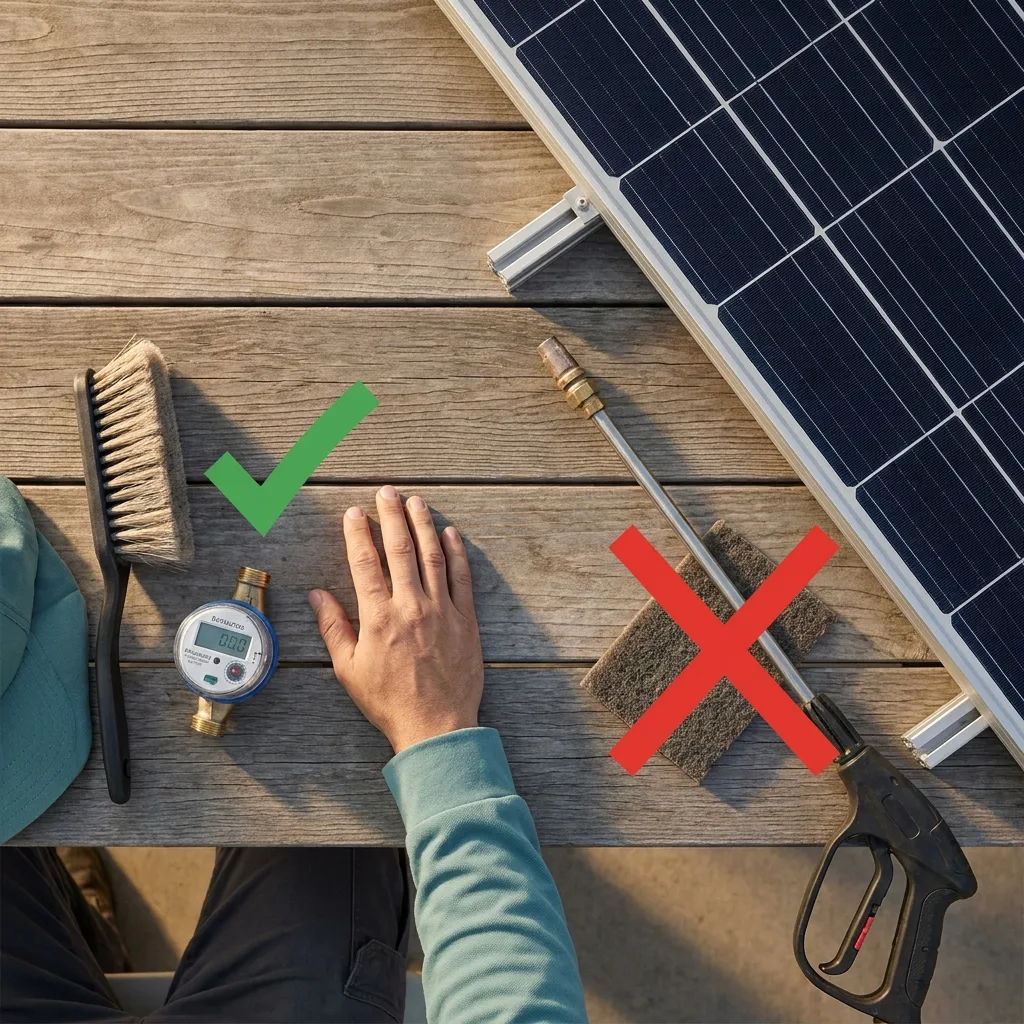
Pressure washing. High-pressure water can force moisture past junction box seals and into the laminate layers. Even modest pressure concentrated through a narrow nozzle scratches the anti-reflective coating. Many manufacturer O&M manuals explicitly prohibit pressure washing. If you pressure wash and the panels delaminate later, the manufacturer can deny the product warranty claim.
Abrasive pads and scrapers. Metal scrapers and scouring pads scratch the glass surface and the anti-reflective coating. Micro-scratches scatter light instead of transmitting it, which compounds the soiling problem you were trying to solve.
Harsh chemicals. Bleach, ammonia-based cleaners, solvents, and most household detergents are not approved by panel manufacturers. Some react with the frame anodizing or leave residue that attracts more dirt. If you cannot find the chemical name on your manufacturer’s approved product list, do not use it.
Walking on panels. This one sounds obvious, but DIY cleaning attempts sometimes involve stepping on the panel surface or frame edges. Micro-cracks from foot traffic are hard to detect visually but create hot spots that accelerate cell degradation.
Mineral etching from hard tap water. San Diego’s tap water is among the hardest in California. Cleaning with unfiltered tap water and letting it dry on the glass leaves calcium and magnesium deposits that bond to the surface over time. Repeated cycles etch into the anti-reflective coating. This is a slow process, but after a few years it measurably reduces output and is difficult to reverse without professional treatment.
Ignoring soiling that pulls output below the warranty curve. This is the performance warranty angle. If your monitoring shows production declining and you take no action, the manufacturer has grounds to argue the shortfall stems from inadequate maintenance rather than a product defect.
What actually protects your warranty
The good news is that proper cleaning is straightforward. It does not require specialized equipment if you follow the right approach.
Soft-wash with deionized or distilled water. Deionized water is the standard for solar panel cleaning because it leaves no mineral residue when it dries. This matters more in San Diego than in wetter climates because our dry season means panels often go months between rain events, so whatever water you use has to evaporate cleanly.
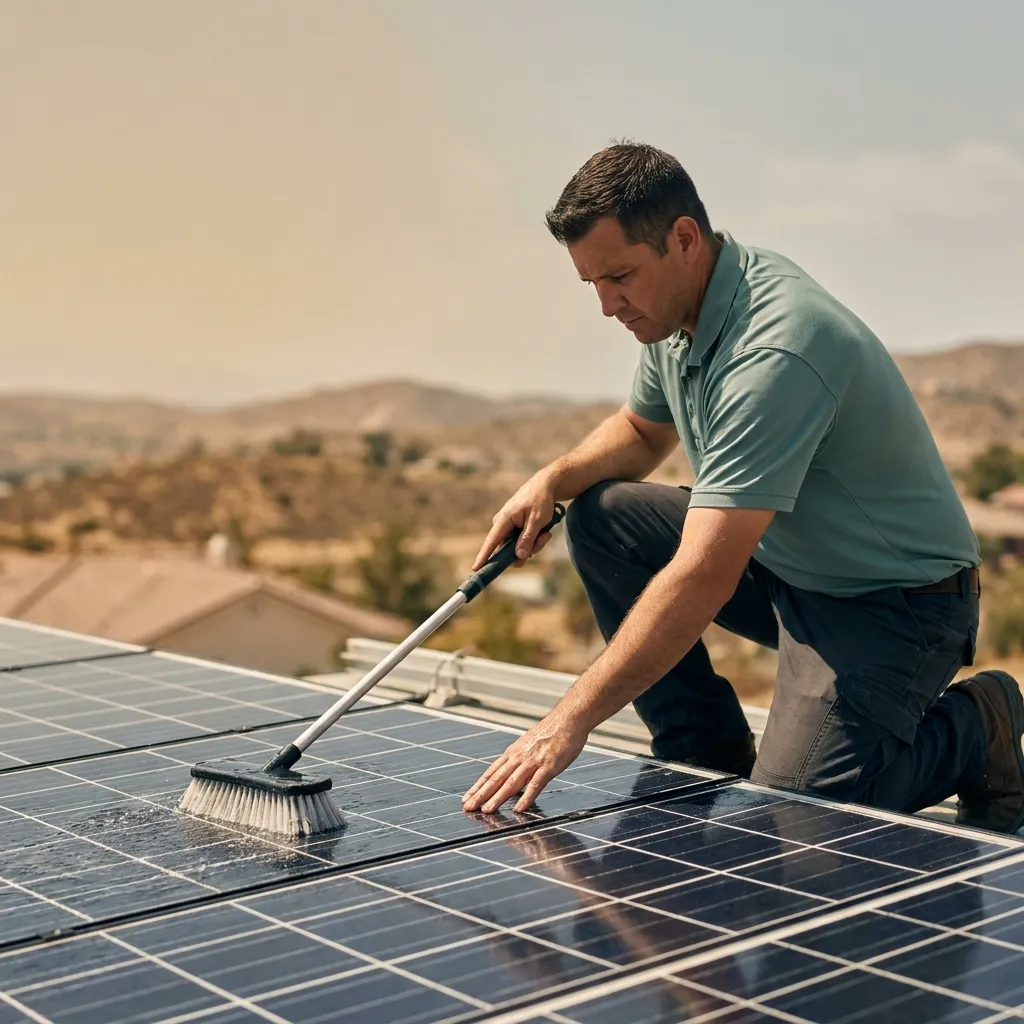
Soft brushes and microfiber cloths. A soft-bristle brush or microfiber pad removes dust, pollen, and bird droppings without touching the anti-reflective coating. The goal is to let the water do most of the work.
Manufacturer-approved products only. If you use any soap or cleaning agent, confirm it appears on the manufacturer’s recommended list. Most O&M manuals are available on manufacturer websites. When in doubt, plain deionized water is always safe.
Keep records. Save receipts, service dates, and before-and-after output readings from your monitoring system. If you ever file a performance warranty claim, documentation that you maintained the system as recommended carries real weight.
Our solar maintenance plan includes service records you can use for exactly this purpose.
A quick do/don’t reference
| Do | Don’t |
|---|---|
| Soft brush or microfiber pad | Metal scrapers or scouring pads |
| Deionized or distilled water | Unfiltered tap water |
| Manufacturer-approved cleaners | Bleach, ammonia, solvents |
| Low-pressure rinse | Pressure washer |
| Document every cleaning | Clean without keeping records |
| Follow your O&M manual | Assume any method is fine |
For hard water stains that have already bonded to the surface, standard cleaning methods are not enough. Our hard water stain removal service uses professional-grade mineral treatment that does not damage the coating.
The San Diego angle
San Diego’s climate creates two specific warranty risks that homeowners in other regions do not face as often.
First, the hard water. San Diego routinely measures water hardness above 200 mg/L. Using tap water for cleaning accelerates mineral buildup and, over years, can etch the coating in ways that affect both output and warranty standing.
Second, the long dry season. Panels that go eight or nine months without significant rainfall accumulate layers of salt aerosol from the coast, wildfire ash during fire season, and construction dust. This level of soiling does pull production down meaningfully. Research from the National Renewable Energy Laboratory has documented soiling losses of one to two percent per month in dry California climates, which adds up quickly. Staying ahead of it with a documented soft-wash cleaning schedule is both the right maintenance choice and the defensible position if you ever need to make a warranty claim.
If you want to do some cleaning yourself, read our DIY solar panel cleaning risks post before you start, and review our breakdown of soft-wash cleaning methods for San Diego panels.
Read your specific warranty documents
This post covers general patterns across the solar industry, but every manufacturer has their own O&M manual with specific guidance on approved cleaning methods, required maintenance intervals, and what actions void coverage. SunPower, LG, Panasonic, Qcells, REC, and other major manufacturers publish these online. Search for your panel model number plus “operation and maintenance manual.”
If your installer provided a workmanship warranty on top of the manufacturer warranty, that document may also include maintenance requirements. Read both.
This post is general information only. It is not legal advice and is not a substitute for your actual warranty documents. If you have questions about whether specific cleaning has affected your warranty, contact your panel manufacturer directly.
When to call us
If you are not certain your current cleaning method meets your manufacturer’s requirements, the safest move is to switch to a professional service with documented procedures. Our solar panel cleaning service uses deionized water, soft-wash technique, and equipment that meets manufacturer guidelines. We provide a service record after every visit.
Call us at (858) 925-5546 for a free quote.
For a full picture of what a maintenance schedule should include, read our solar panel maintenance plan guide.