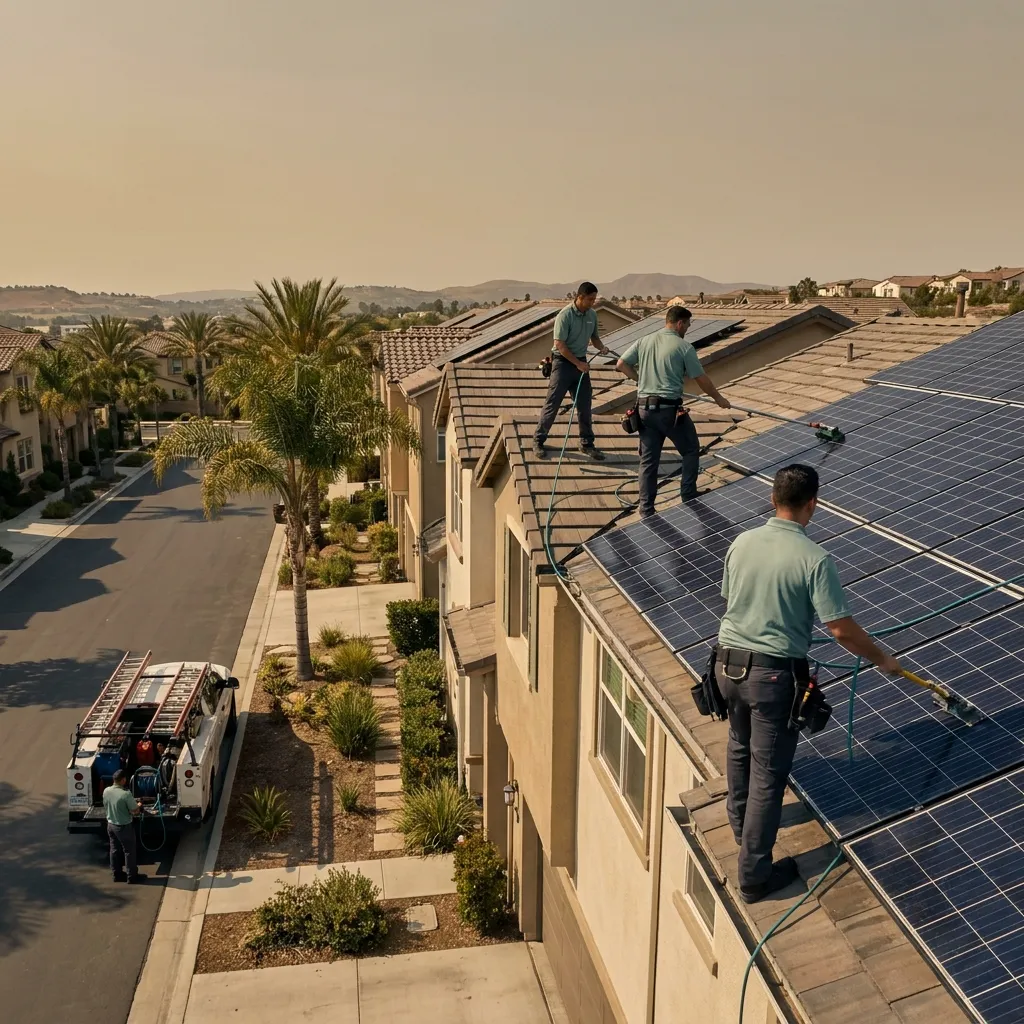
HOA solar panel cleaning is something we handle differently than a single-home job. We coordinate one building-wide visit, clean every common-area and residential array in the community, deliver written production-recovery documentation to the board, and leave a maintenance contract in place so the schedule runs itself. Property managers and community association managers don’t have to chase down individual unit owners or manage multiple vendor visits. One call, one invoice, one report.
Why HOA and condo solar needs a different approach
A single-family home has one set of panels on one roof. An HOA might have 40 rooftops, a shared common-area array, and dozens of unit owners who all have a stake in system performance. That complexity changes what “cleaning” actually means.
For a board or property manager, the real question isn’t just whether the panels are dirty. It’s whether the community is losing money because of dirty panels, whether there’s a record of maintenance activity for the association’s files, and whether the service provider carries the insurance required for work on common-area property.
The solar-cleaning pros we match carry general liability and workers’ comp. Ask them for a certificate of insurance before work begins. That documentation matters for HOA management companies and their insurance carriers.
How dirt affects production, and who pays for it
Soiling losses on solar panels range from 1.5% to over 25% depending on location and time since last cleaning, according to research from the National Renewable Energy Laboratory. For a community with a 200 kW common-area array, even a 10% production loss adds up fast on a monthly SDG&E bill.
The HOA is paying for power it isn’t getting. When arrays go uncleaned for a year or more, which is common in communities that don’t have a maintenance contract, production losses compound with every dry, dusty month. San Diego’s low rainfall means natural cleaning from rain is minimal. Panels accumulate pollen, bird droppings, marine layer deposits, and construction dust without any seasonal reset.
Boards that track production numbers before and after a cleaning can see the recovery directly in their monitoring data. We include a written production-recovery summary with every service visit so that data goes into the board’s records.
What HOA solar cleaning looks like in practice
Here’s how a typical community service visit works:
| Step | What happens |
|---|---|
| Pre-visit coordination | We work with the property manager to schedule a date that avoids move-in days, community events, or HOA meeting weekends |
| Resident notification | Property manager sends notice; we don’t need access inside units for rooftop arrays |
| Building-by-building cleaning | Crews move systematically across all buildings using purified water and soft brushes, no pressure washing, no chemicals |
| Common-area arrays | Handled in the same visit; carport canopies and ground mounts included |
| Post-clean inspection | We flag any panels with physical damage, shading issues, or bird nesting for the board’s review |
| Documentation | Written report with panel count, condition notes, and production-recovery data delivered to the property manager |
The goal is to get in and out without disrupting residents. Most communities in the 50-150 unit range take one full day.
San Diego communities where we work regularly
Master-planned communities in Chula Vista, San Marcos, Carlsbad, and Rancho Bernardo built heavily with solar starting around 2015. Many of those HOAs now have aging arrays that haven’t been cleaned since installation.
A few areas worth calling out:
Otay Ranch and 4S Ranch, large master-planned HOAs with hundreds of solar homes and shared common-area systems. High dust accumulation from inland heat and wind.
Pacific Highlands Ranch and Bressi Ranch, newer communities with high solar density. Panels are often still under manufacturer warranty, which can require documented cleaning records.
Civita, urban infill with shared rooftop arrays over common spaces. Coordinated access is more complex here, and we’re familiar with the logistics.
Coastal HOAs (La Jolla, Del Mar, Carlsbad coast), salt air deposits create a fine film on panels that reduces output more than typical dust. Communities within a mile of the coast need cleaning at least twice a year. SDG&E’s solar resource page notes that panel performance is location-dependent, and coastal conditions are a real factor.
Downtown high-rise common areas, rooftop and parking structure arrays that serve building common loads. These require commercial access coordination and are jobs we quote on-site.
Maintenance contracts for property management companies
A one-time cleaning helps, but it doesn’t solve the problem. Panels in San Diego need cleaning two to four times per year depending on location. Property managers who handle multiple HOA communities often set up a portfolio maintenance contract with us, one agreement, multiple communities, quarterly or semi-annual visits scheduled in advance.
For boards, a maintenance contract means the spend is predictable and budgetable. It shows up in the annual budget line item rather than as a surprise expense when production numbers finally flag the problem.
We price community work per array or per building depending on the layout. Volume pricing applies across multi-community contracts. We can provide a detailed quote for a single HOA or for a full property management portfolio.
What boards need to ask any solar cleaning vendor
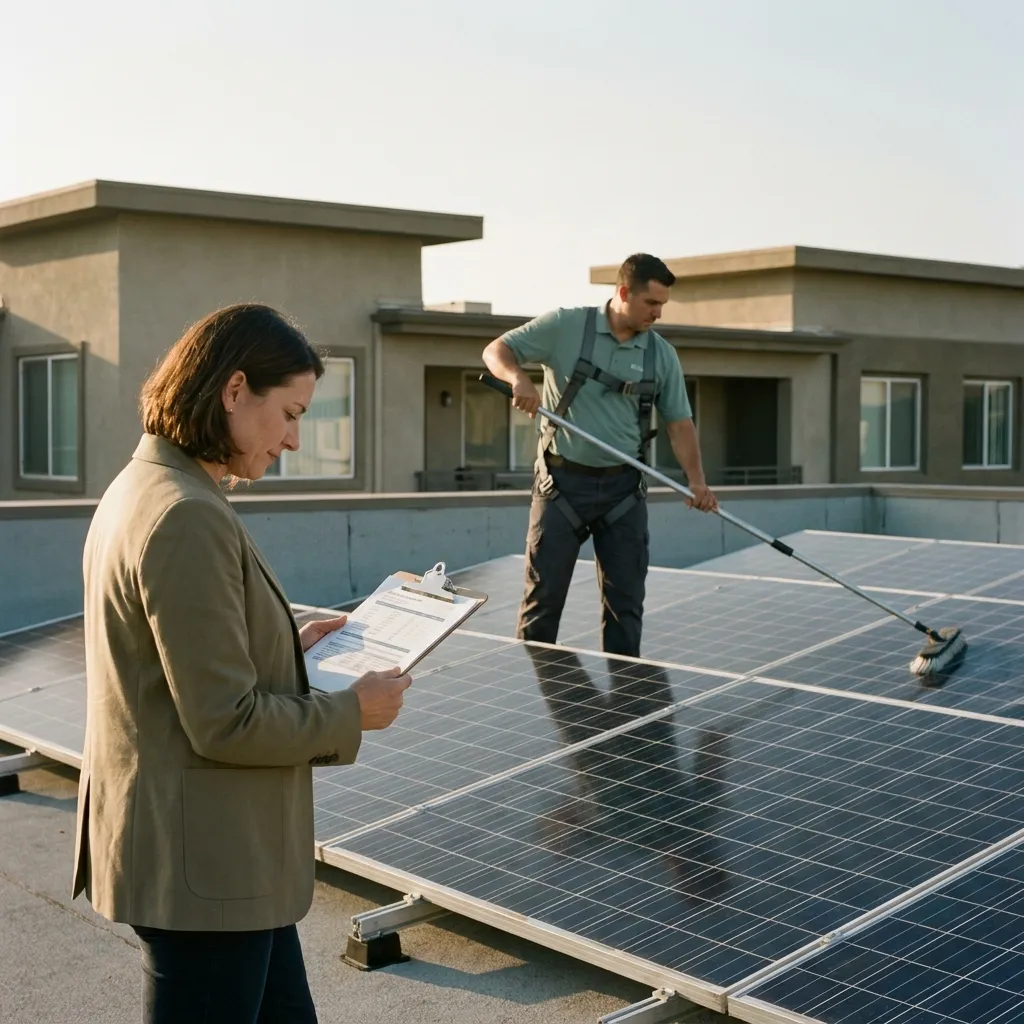
Before signing with any provider, HOA boards and property managers should get clear answers on a few things:
Insurance documentation. Ask for a certificate of insurance naming the HOA or management company as additionally insured. A vendor without adequate coverage creates liability exposure for the association.
Water source and method. Purified, deionized water is the standard for panel cleaning. It doesn’t leave mineral deposits and doesn’t require chemicals. Tap water or pressure washing can damage panels or void warranties.
Production reporting. Ask whether the vendor provides written before-and-after production data. If they don’t, you have no way to show the board that the cleaning had any effect.
References from comparable properties. A vendor who has cleaned single-family homes is not automatically qualified to coordinate a 60-building HOA job. Ask specifically for community or property management references.
Our commercial solar cleaning service is built for exactly this type of job. We also offer a solar maintenance plan that includes scheduled visits, performance monitoring to track output between visits, and panel inspection reports for warranty and insurance documentation.
For context on what the service typically costs, our solar panel cleaning cost guide breaks down pricing by system size and property type. For more on the commercial side specifically, see our commercial solar panel cleaning guide. And if the board wants hard data on whether cleaning actually moves the needle on output, our post on whether cleaning increases solar output covers the research.
When to call us
If your HOA or condo community has solar and no documented cleaning in the past 12 months, it’s worth getting a quote. That’s true whether it’s a common-area array, unit rooftops, or both.
Call us at (858) 925-5546 for a community solar cleaning quote. We’ll ask about the community size, array configuration, and any access requirements, then put together a flat-rate proposal the board can take to a vote.