You invested in solar to save money and harness San Diego’s abundant sunshine. Your panels were installed, your meter started spinning backward, and you enjoyed lower energy bills. But over time, you might notice that your system isn’t producing what it used to, leaving you to wonder if they just need a good wash.
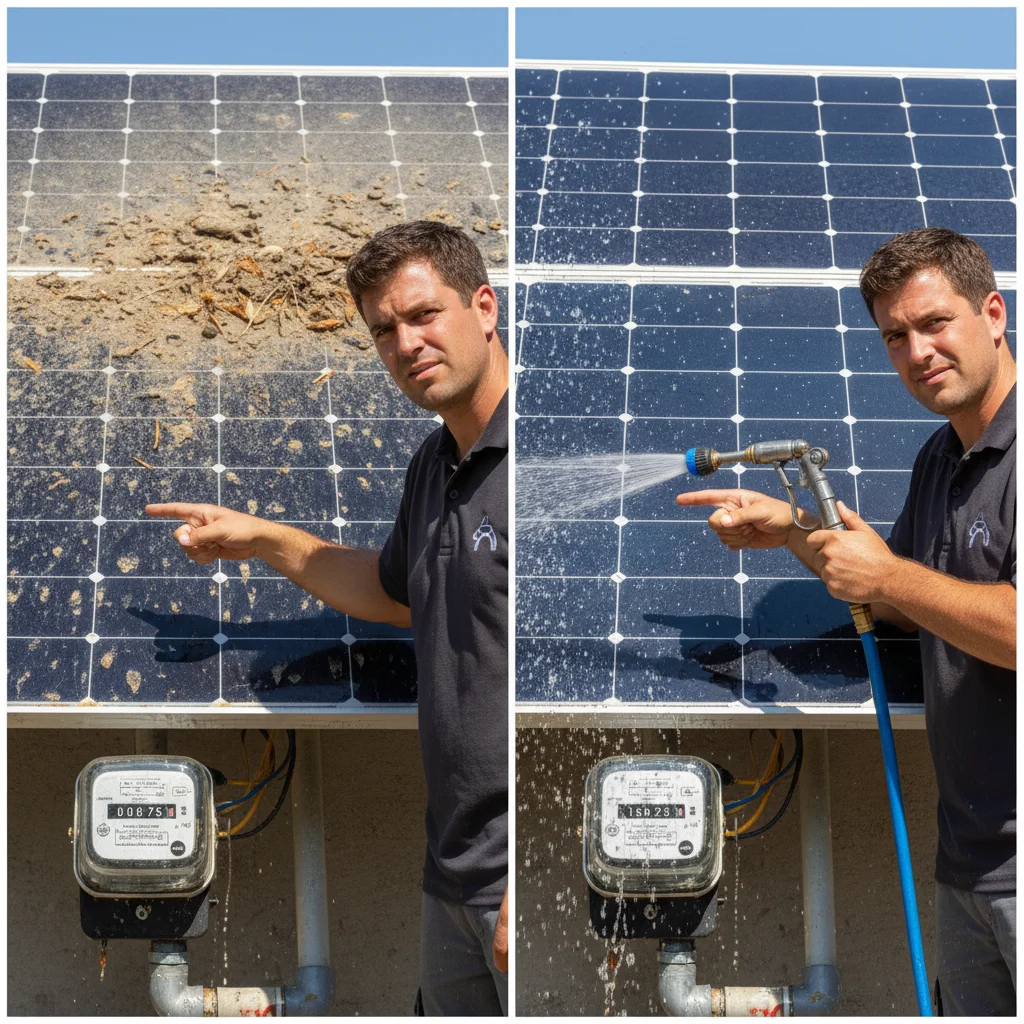
The short answer is yes, they absolutely do. Leaving your solar panels dirty is like putting a dimmer switch on your investment. Let’s break down exactly why professional cleaning is a crucial part of solar ownership in San Diego County.
How much power do you lose from dirty panels?
It’s easy to underestimate the impact of a thin layer of dust or grime. But when that layer covers every photovoltaic cell in your array, the losses add up quickly and directly impact your wallet.
Studies from organizations like the National Renewable Energy Laboratory (NREL) have shown that dirty solar panels can lose a significant portion of their efficiency. While numbers vary based on location and the type of soiling, energy loss can range from 5% to as high as 30% in dusty, dry climates like ours. For the average San Diego homeowner, a 20% loss in production could mean hundreds of dollars in lost energy savings over the course of a year.
Think of it this way: if your system is supposed to generate 500 kWh in a month but it’s only producing 400 kWh due to soiling, you’re forced to buy that 100 kWh difference from SDG&E at peak rates. The cost of a professional cleaning is often recouped very quickly through restored energy production. The best way to track this is through consistent performance monitoring, which allows you to see your system’s output data over time. When you notice a gradual but steady decline that isn’t related to cloudy weather, it’s a strong sign that it’s time for a cleaning.
What gets on your panels in San Diego County?
San Diego’s beautiful climate comes with a unique blend of airborne contaminants that love to stick to solar panels. The grime on your system isn’t just one thing; it’s a cocktail of local environmental factors that build up, forming a stubborn film that blocks sunlight.
Here’s a look at what we’re up against in our region:
- Coastal Salt Spray: If you live in coastal communities like La Jolla, Del Mar, or Coronado, your panels are constantly exposed to a fine mist of salt from the ocean. This salt crystallizes on the panel surface, creating an opaque layer that is difficult to remove and can even be corrosive over time.
- Inland Dust and Pollen: In East County areas like Alpine, Ramona, and Escondido, dry conditions and Santa Ana winds whip up a lot of dust and agricultural debris. During the spring, a thick yellow layer of pollen can coat everything, including your panels, significantly reducing their ability to absorb sunlight.
- Bird Droppings: This is a problem across the entire county. Bird droppings, especially from our abundant seagulls and pigeons, are not only unsightly but also highly acidic. They create concentrated “hot spots” on panels that block light completely and can even damage the anti-reflective coating if left for too long.
- Wildfire Ash and Soot: Unfortunately, fire season is a part of life in Southern California. Ash and soot from nearby fires can travel for miles and settle on your roof. This dark, dense material is a major blocker of sunlight and can be particularly tricky to clean without smearing.
- General Urban Pollution: From freeway grime to construction dust, the general air pollution in a dense urban area adds another layer to the mix, contributing to a tough, baked-on film.
This combination of elements means that what’s on your panels is more than just loose dirt. It’s a compacted layer that requires more than a simple rinse to remove.
Can rain clean your solar panels for you?
This is one of the most common misconceptions we hear from solar owners. Many people assume that a good rainstorm will wash everything away, but that’s rarely the case in San Diego. Relying on rain to clean your panels is like hoping a light drizzle will wash your car after a trip to the desert.
Rain can sometimes rinse off the lightest layer of loose dust, but it does very little to remove the stuck-on grime we just discussed. Here’s why rain isn’t a substitute for a proper cleaning:
- It Smears, It Doesn’t Scrub: Rain lacks the gentle friction needed to lift off bird droppings, baked-on salt spray, or oily residue. Instead, it often mixes with the existing dust to create a muddy film that spreads over the panel, sometimes making the situation worse.
- San Diego’s Rain is Infrequent: We’re known for our sunny days, not our rainfall. We can go for months without a significant storm, giving grime plenty of time to accumulate and bake onto the glass in the hot sun.
- Rainwater Isn’t Pure: Rainwater itself contains dust particles and pollutants. As the water evaporates, it can leave behind mineral deposits and spots, a problem known as hard water staining. This is especially true after the “first flush” rain of the season, which washes a large amount of pollution out of the atmosphere.
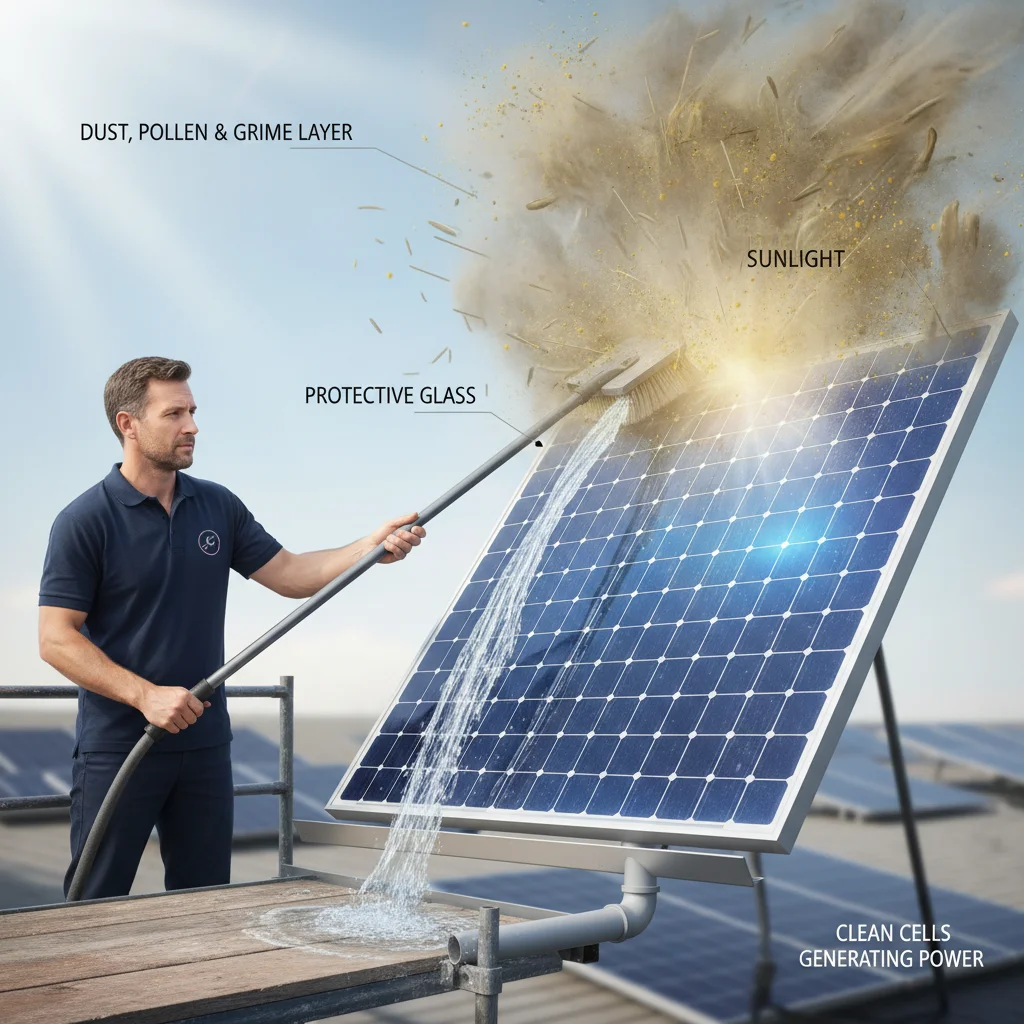
A professional cleaning uses purified water and specialized, non-abrasive tools to gently scrub away the film and leave your panels completely spotless. This allows them to capture every possible ray of sunlight and operate at peak efficiency.
How often should you clean your solar panels?
The ideal cleaning frequency for your solar panels depends heavily on your specific location within San Diego County and the environmental factors around your home. There isn’t a single “one-size-fits-all” answer, but we can provide some solid guidelines based on our experience.
As a general rule of thumb, we recommend professional cleaning for most residential systems in San Diego one to two times per year.
- Twice a Year (Recommended): This is the ideal schedule for most homeowners. A cleaning in the late spring (after the pollen season) ensures your panels are clear for the long, sunny summer days when they produce the most power. A second cleaning in the fall can remove the dust and grime accumulated over the summer and prepare them for the winter.
- Once a Year (Minimum): If your home is in an area with less dust and you don’t notice a major drop in performance, an annual cleaning may be sufficient. This is the absolute minimum we suggest to prevent permanent buildup and maintain system health.
You might need more frequent cleanings if you live:
- Near the coast: To combat the constant buildup of salt spray.
- In a dusty or rural area: Especially if you’re near agricultural land or new construction.
- Under a flight path or near a busy freeway: Where soot and pollutants are more concentrated.
- After a specific event: A major wildfire or a Santa Ana wind event that deposits a heavy layer of debris is a perfect time to schedule a cleaning.
The best approach is to monitor your system’s output. If you see a noticeable dip in energy production, it’s a clear sign your panels need attention. Our professional solar panel cleaning service is designed to restore your system’s performance quickly and safely, maximizing your return on investment.
The risks of cleaning panels yourself
While it might seem like a simple task, attempting to clean your own solar panels comes with significant risks, both to you and your expensive solar array. Before you grab a ladder and a garden hose, it’s important to understand the potential dangers involved.
First and foremost is personal safety. Getting on a roof is inherently dangerous. A slip or fall can result in serious injury. Professionals are equipped with the proper safety gear, including harnesses and non-slip footwear, and are trained to navigate rooftops safely. This is not a casual weekend chore.
Second, you risk damaging your panels. This is the most common issue we see with DIY attempts.
- Using the Wrong Water: Tap water in San Diego is very hard, full of minerals. Using it to wash your panels and letting it air dry will leave behind chalky mineral deposits (hard water spots) that are extremely difficult to remove and will continue to block sunlight. Professionals use de-ionized or reverse osmosis water that leaves a spot-free finish.
- Using the Wrong Tools: A pressure washer can be far too powerful, potentially breaking the glass, forcing water past the seals, and causing electrical damage. Stiff brushes, abrasive sponges, or harsh chemicals can permanently scratch the anti-reflective coating on the panels, reducing their effectiveness forever.
- Voiding Your Warranty: Many solar panel manufacturers specify that cleaning must be done according to their guidelines. Using improper methods or chemicals can void your warranty, leaving you on the hook for expensive repairs or replacements.
Hiring an insured professional ensures the job is done correctly and safely. A professional company carries the right insurance to cover any potential accidents and understands the precise techniques required to clean your panels without causing any harm. It’s a small price to pay to protect a five-figure investment.
When to call us
If you’ve noticed your energy bills creeping up or can see a visible layer of grime on your panels, it’s time to restore your system’s power. Protecting your investment and ensuring peak performance requires more than just rain. Call us at (858) 925-5546 for a same-day estimate.