Yes. Cleaning solar panels increases output, and in San Diego it does so more than almost anywhere else. National Renewable Energy Laboratory (NREL) research pegs typical soiling loss near 5%, but dry, dusty parts of California climb toward 25%. We barely rain here for half the year. That means dust, pollen, and film just sit on your glass and quietly steal production until someone washes it off.
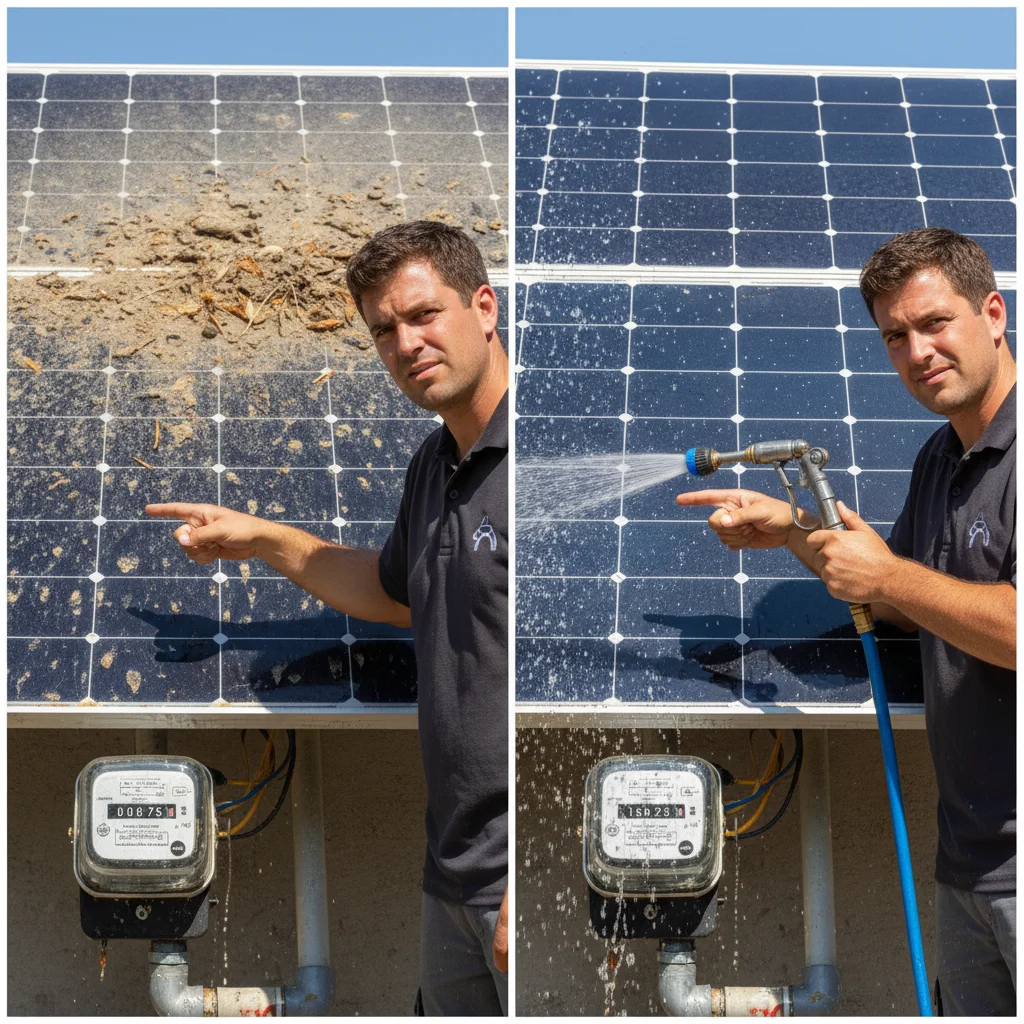
So the real question isn’t whether cleaning helps. It’s how much it helps here, and when the gain is worth paying for. Let’s break that down with real numbers.
How much output does cleaning actually recover?
Soiling blocks light before it ever reaches the cell. Restore the glass and you restore the production. The recovery is immediate and measurable.
One documented before-and-after case showed a dirty array producing 744 kWh jump to 910 kWh after a wash. That’s a 21% gain from a single cleaning. Most San Diego homes won’t see a swing that dramatic every time, but the pattern holds: the dirtier the panels and the longer the dry stretch, the bigger the bounce.
NREL frames the baseline soiling loss at about 5% in average conditions, rising toward 25% in long-dry-season regions like ours. So a clean is not a 1% tune-up here. In East County and inland valleys it can be the difference between a system that pays for itself and one that limps along.
The only way to know your number is to watch the meter. Steady performance monitoring shows the slow decline that soiling causes, separate from cloudy days or seasonal sun angle.
Why San Diego panels lose more than the national average
The national soiling figures assume regular rain rinses the glass. We don’t get that. Several local conditions stack on top of each other.
- Long dry season with no self-cleaning. May through October we can go months without measurable rain. Dust and pollen build into a baked-on film that no drizzle removes.
- Marine-layer film. Coastal mornings in places like La Jolla, Del Mar, and Encinitas leave a damp salt haze. It dries into a thin, light-blocking layer.
- Wildfire ash. Fire season drops fine, dark soot across the county. Ash is dense and blocks light hard, and it smears if rinsed wrong.
- Hard-water spotting. San Diego tap water is mineral-heavy. Rinsing with a hose and letting it dry leaves chalky spots that block light and keep blocking it.
- Pollen and inland dust. Spring pollen plus Santa Ana dust in Ramona, Alpine, and Escondido coats panels fast.
None of this rinses off on its own. That’s why a region with great sun still loses real production to dirt.
When does cleaning pay off? A simple framework
You don’t need to clean on a whim. Run the math against your own system. Here’s a rough framework for a typical San Diego home.
| Your situation | Likely output loss | Worth cleaning? |
|---|---|---|
| Cleaned in last 3 months, coastal, some rain since | 2% to 4% | Wait |
| 6+ months since last clean, inland or East County | 8% to 15% | Yes |
| Visible film, pollen, or ash, no rain for months | 15% to 25% | Yes, soon |
| After a wildfire ash event | 10% to 25% | Yes, promptly |
The quick test: estimate your annual energy savings, multiply by your loss percentage, and compare to the cleaning cost. A home saving $1,800 a year that’s down 15% is losing about $270 a year to dirt. A cleaning usually costs a fraction of that, so it pays back fast. For real local pricing, see our solar panel cleaning cost guide for San Diego.
Will the gain last, or does dirt come right back?
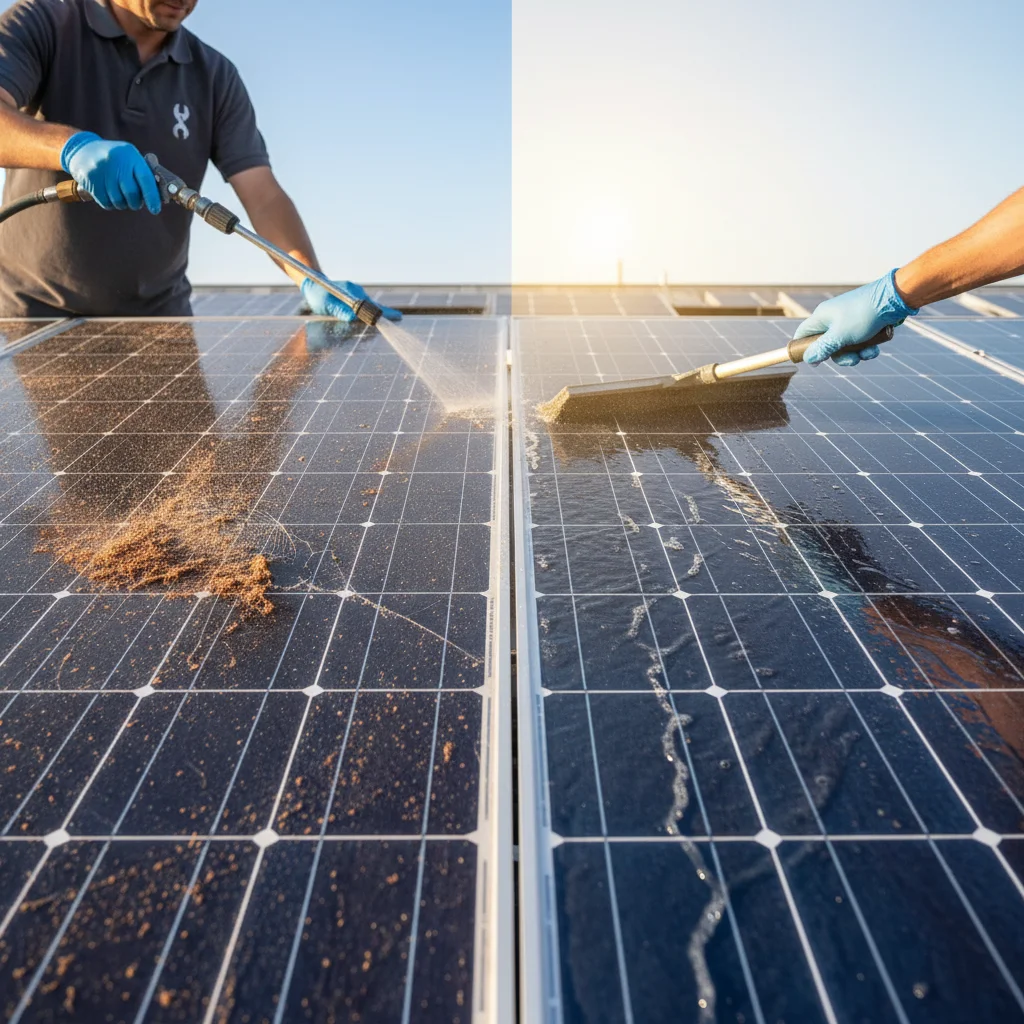
A good clean holds for months, not days. In coastal areas with a little marine moisture, panels stay cleaner longer. In dry inland zones, film rebuilds faster through summer.
For most San Diego homes, two cleanings a year keep output near peak: one in late spring after pollen season, one in fall after the dry summer. Heavy-dust homes or post-fire situations may want more. The point isn’t to chase a spotless look. It’s to keep the soiling loss low enough that you’re not quietly paying SDG&E for power your roof should be making.
How we protect output without risking your panels
The wrong cleaning can cost more than dirty glass. Hard-water rinses leave spots. Pressure washers can force water past seals. Stiff brushes scratch the anti-reflective coating, which lowers output permanently.
We use deionized-water and soft-wash methods that lift grime without abrasives or harsh chemicals. Deionized water dries spot-free, so you don’t trade dust for mineral haze. Soft-wash is gentle on the coating and the seals. These methods follow manufacturer cleaning guidance, so your panel warranty stays intact. That’s the whole job: more output, zero new damage.
Frequently asked questions
Does cleaning solar panels really increase output?
Yes. Soiling blocks light before it reaches the cell, so removing it restores production right away. In San Diego’s long dry season, recovered output can range from a few percent to over 20% on heavily soiled panels.
How much can dirty panels cost me each year?
It depends on your savings and soiling level. A home saving $1,800 a year that’s down 15% loses roughly $270 annually to dirt. Inland and East County homes tend to lose the most.
Won’t rain clean my panels for free?
Rarely here. We go months without meaningful rain, and light rain often smears dust into a muddy film instead of removing it. Rainwater can also leave mineral spots as it dries.
How often should San Diego panels be cleaned?
Most homes do well with two cleanings a year, late spring and fall. Dusty inland properties, coastal salt-spray homes, and post-wildfire situations may need more.
Can cleaning damage my panels or void the warranty?
Improper cleaning can. Pressure washing, hard tap water, and abrasive brushes all cause harm. We use deionized-water soft-wash methods that follow manufacturer guidance and keep your warranty intact.
Is professional cleaning worth it over doing it myself?
For most owners, yes. DIY rooftop work is risky, and tap water plus the wrong tools can lower output or scratch the coating. See the DIY solar cleaning risks before you climb up.
Get a straight answer on your system
If your production is sliding and you can see grime on the glass, cleaning will likely bring it back. We give upfront quotes, cover all of San Diego County, and use panel-safe deionized-water methods. Call us at (858) 925-5546 for a same-day estimate.