To clean solar panels in San Diego, rinse them on a cool, overcast morning with low-mineral water, then soft-wash with a soft brush and a panel-safe solution. Finish with a deionized-water rinse so no spots dry on the glass. Never use a pressure washer, never use tap water, and never walk on the array. Our dry climate and hard water make the rinse water you pick the single biggest factor in the result.
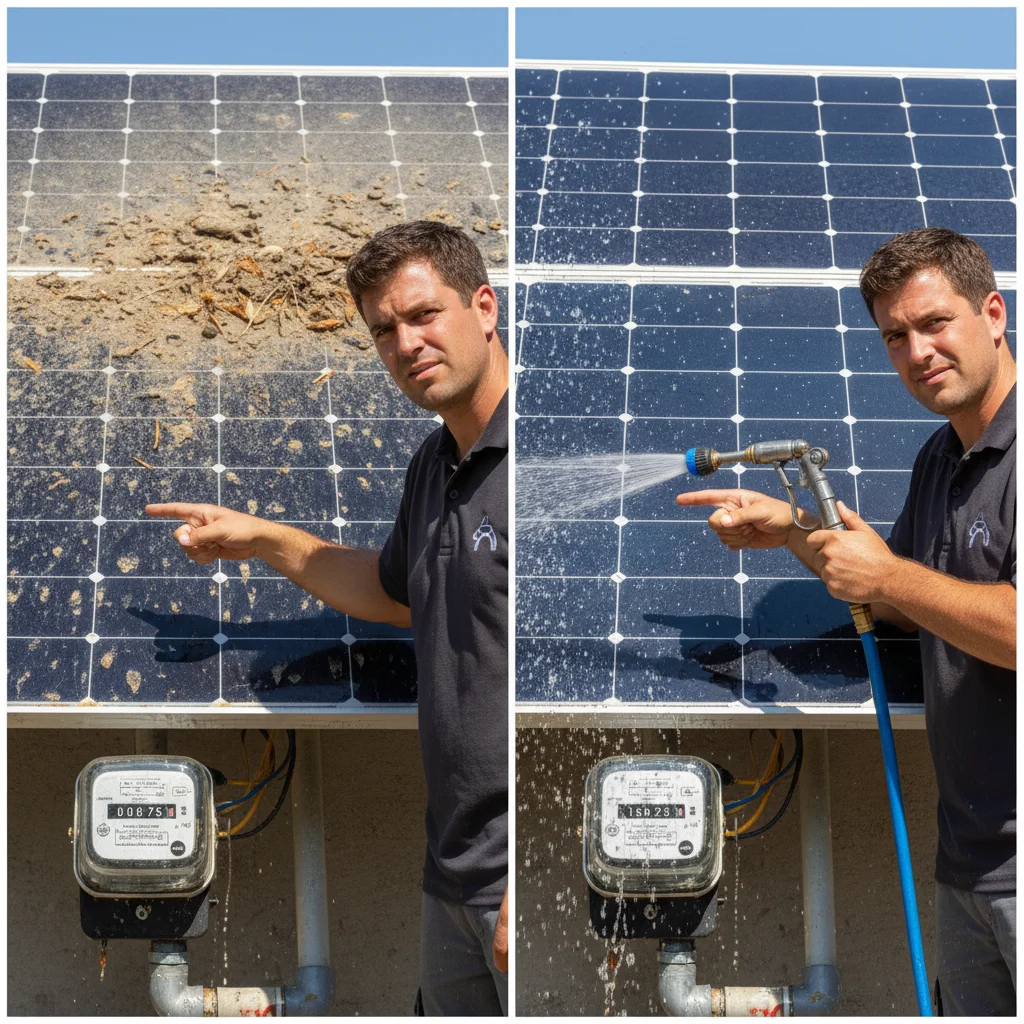
Most cleaning guides give you the same generic steps. They skip what actually matters here. San Diego barely rains, our water is hard, and our panels collect a specific cocktail of dust, marine film, and ash. This guide covers the real process for our county, what to expect, and where the line sits between a safe DIY rinse and a call to a pro.
The step-by-step cleaning process
The method is simple. The details are where panels get scratched or streaked. Here’s the order we follow.
- Pick the right time. Clean early morning or on an overcast, marine-layer day. Glass that’s hot from afternoon sun can crack when cool water hits it, and cleaning solution dries before you rinse, leaving streaks.
- Check production first. Note your system’s output the day before. That gives you a real before-and-after number, not a guess.
- Rinse loose grime. A gentle stream from a garden hose lifts dust, pollen, and dry debris. No pressure washer. High pressure forces water past the panel seals and can void your warranty.
- Soft-wash the film. Use a soft-bristle brush or microfiber mop on a pole with a mild, panel-safe solution. Light pressure only. Work in sections so nothing dries mid-clean.
- Final rinse with clean water. This is the step everyone gets wrong. Rinse with low-mineral or deionized water so the glass dries spot-free.
- Let it air dry. Don’t towel the surface. Wiping drags grit across the glass and scratches the anti-reflective coating.
That’s the whole process. The hard parts are the water you use and getting on the roof safely, which we’ll cover next.
Why tap water is the wrong choice here
San Diego has some of the hardest water in the country. SDG&E-area tap water is loaded with calcium and magnesium. When it dries on your panels, it leaves white mineral spots that block light, exactly the opposite of what you wanted.
This is the part the national guides miss. A how-to written for a rainy state can tell you to “rinse with the hose” because their soft water dries clean. Ours doesn’t. Rinse a San Diego panel with tap water and you’ll watch spots bloom across the glass within an hour.
Two ways to avoid it:
- Deionized water. Minerals are stripped out, so it dries with zero residue. This is what we use on every job.
- Distilled or filtered water for a small DIY rinse. It works, but hauling enough up a ladder for a full array gets old fast.
If hard-water spots have already set in, a regular wash won’t lift them. That needs a dedicated treatment. We cover that in our guide on removing hard water stains from solar panels in Escondido.
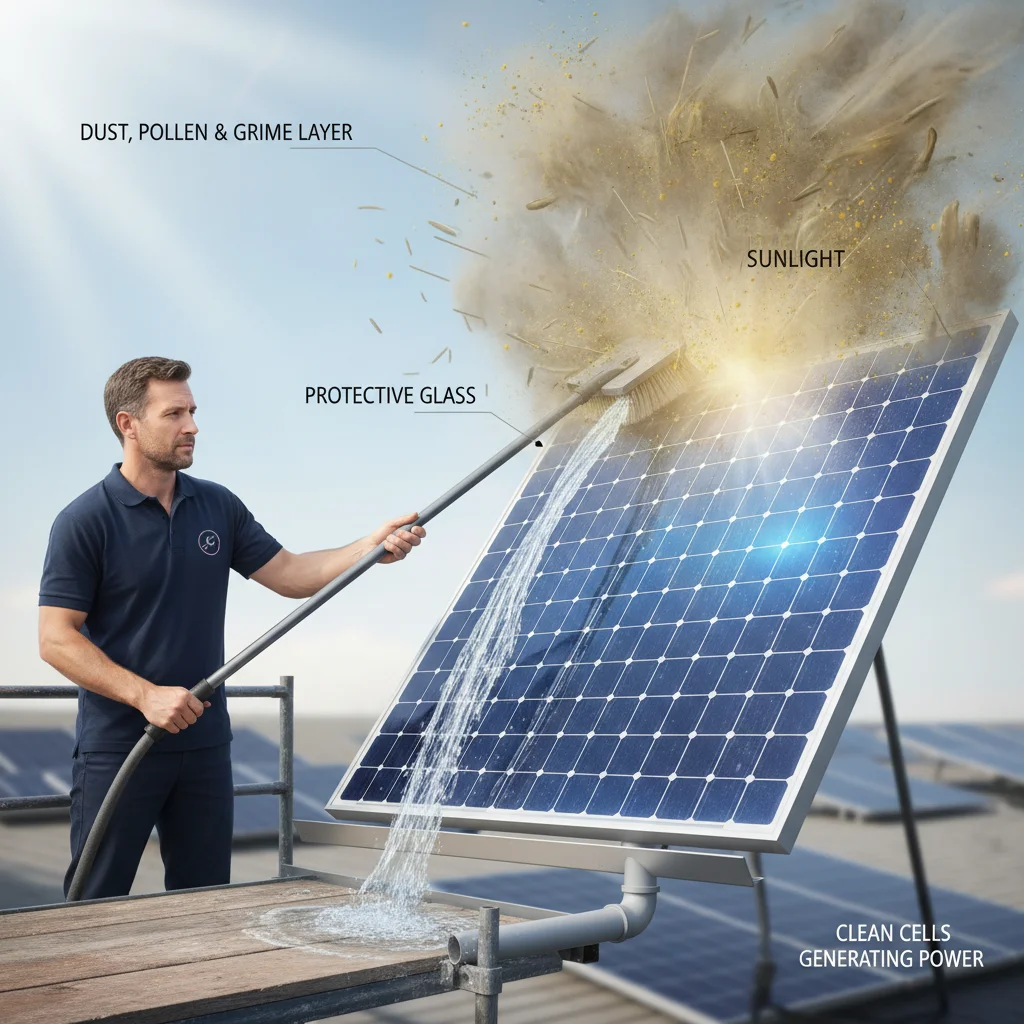
What’s actually on your panels in San Diego
What you’re cleaning off depends on where you live. Our long dry season runs roughly May through October, and with almost no rain there’s no natural rinse. Grime just keeps stacking up.
- Dry-season dust and pollen. From late spring through fall the air carries fine dust and a heavy spring pollen load. Inland and East County homes in Escondido, Ramona, and Alpine see the worst of it.
- Marine-layer film. Coastal homes in La Jolla, Del Mar, Encinitas, and Coronado get a daily fog cycle. The marine layer deposits a thin salty film that dries into a haze across the glass.
- Wildfire ash. Fire season drops fine ash that’s mildly acidic and bonds to warm glass. It needs careful handling, not scrubbing. See our walkthrough on cleaning wildfire ash off solar panels.
- Bird droppings. A countywide problem from gulls and pigeons. They’re acidic and create dead spots that block light completely.
Because it so rarely rains here, the “the rain will clean them” assumption that works elsewhere falls apart. Our panels need a real wash to stay productive.
What it costs and what affects the price
Here’s a straight look at residential cleaning costs in San Diego County. We give upfront quotes, so you know the number before we start.
| Factor | What it means for your price |
|---|---|
| System size | More panels means more time. Small rooftop arrays cost less than large ground mounts. |
| Roof access | Single-story and walkable pitches are quicker. Steep or tall roofs take more setup. |
| Soiling level | A light dry-season dusting is fast. Caked ash, hard-water spots, or droppings take more work. |
| Cleaning method | A standard soft-wash differs from a hard-water-stain treatment or post-fire ash cleanup. |
| Frequency | Homes on a maintenance plan pay less per visit than one-off deep cleans. |
A typical San Diego home with a standard rooftop array falls in a modest per-visit range for a soft-wash cleaning. The exact number depends on the factors above, which is why we quote each property rather than post a flat rate that won’t fit your roof. For a full breakdown, read our solar panel cleaning cost guide for San Diego.
One thing to weigh against the cost: dirty panels in our climate can lose a real chunk of output. If a cleaning restores even 15 to 20 percent of production, it often pays for itself in lower SDG&E bills well before your next wash.
When to clean it yourself and when to call a pro
A light DIY rinse from the ground is fine for a single-story home with easy access. Hose off loose dust, soft-wash with deionized water, and you’re done.
Call a pro when any of these apply:
- Your roof is steep, tall, or hard to reach safely.
- You see hard-water spots, baked-on ash, or heavy droppings that won’t rinse off.
- Your warranty has specific cleaning requirements you don’t want to risk.
- You’d rather not haul deionized water and equipment up a ladder.
The biggest reasons to skip DIY are safety and warranty. Roof falls are serious, and pressure washing or harsh chemicals can void your panel warranty. Our methods are warranty-safe by design. We use soft-wash technique and deionized water, no high pressure, no abrasive chemicals. We cover the real hazards in detail in our breakdown of DIY solar panel cleaning risks.
Ready for a clean array without the ladder? We serve all of San Diego County with upfront quotes and warranty-safe cleaning. Call us at (858) 925-5546 or learn more about our residential solar panel cleaning service.
Frequently asked questions
How often should I clean solar panels in San Diego?
Most homes here do well with two cleanings a year, usually once near the start of the dry season and once after it. Coastal homes with marine film and inland homes with heavy dust may want more frequent visits.
Can I use a pressure washer on solar panels?
No. High pressure can force water past the panel seals, damage the surface, and void your warranty. A garden hose stream plus a soft brush is all you need.
Why can’t I just rinse them with the garden hose?
You can rinse loose dust, but San Diego tap water is hard. It dries into white mineral spots that block light. A clean-water or deionized final rinse is what leaves the glass spot-free.
Will the rain clean my panels?
Not here. San Diego gets very little rain, and our long dry season means grime builds up for months with no natural rinse. Panels need an actual cleaning to stay productive.
Is it safe to walk on my solar panels to clean them?
No. Standing on panels can crack cells and create micro-fractures you can’t see. Clean from a ladder or pole, or hire a pro who works from the roof edge safely.
Does cleaning really boost my energy output?
Yes. Dirty panels in a dusty, low-rain climate can lose a meaningful share of production. A proper cleaning restores light to the cells and shows up as higher output and lower bills.