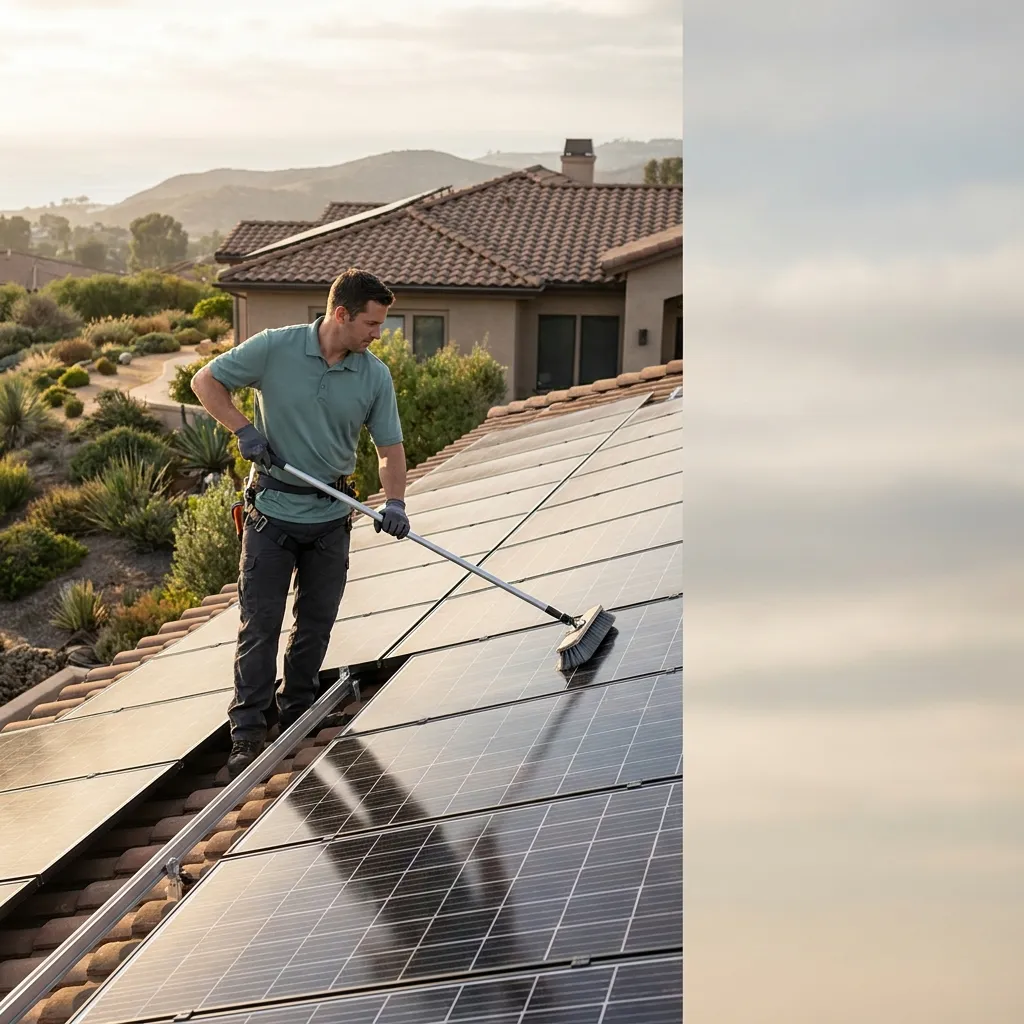
The best time to clean solar panels in San Diego is late spring, typically May through early June, right after the rainy season ends and before the long dry stretch begins. That single cleaning sets your panels up for the months when sun is highest, electricity rates peak under time-of-use billing, and there is zero rain to rinse off what builds up. A second cleaning in late fall, after wildfire season settles down, covers the rest of the year for most homes. Coastal properties and sites near construction or heavy traffic often need quarterly service.
Why timing matters more in San Diego than most places
San Diego gets roughly 10 inches of rain per year, nearly all of it between November and March. Compare that to Seattle’s 38 inches or even Los Angeles’s 15. What that means for solar: your panels go months at a stretch with no natural rinse. Research from the National Renewable Energy Laboratory (NREL) puts soiling losses from dust, pollen, and particulates at roughly 3-7% per year for California systems, and that loss compounds the longer cleaning gets skipped.
San Diego’s climate also layers on several soil types that rain alone would not clear: marine salt film along the coast, wildfire ash in fall, pollen in spring, and fine clay dust blown in from the desert during Santa Ana wind events. Each one deposits differently and calls for a slightly different response.
What each season does to your panels
| Season | What’s happening | Recommended action |
|---|---|---|
| Winter (Nov-Mar) | Most of the annual rain, partial rinsing, occasional Santa Ana dust events | Monitor; clean after major dust events |
| Spring (Mar-May) | Heavy pollen, “May Gray” marine layer deposits salt film on coastal panels | Clean as rainy season ends, before summer |
| Summer (Jun-Sep) | Zero rain, dust and salt accumulate, peak production and peak electricity rates | Clean once in June to protect summer output |
| Fall (Oct-Nov) | Wildfire ash and Santa Ana winds, dry conditions continue | Second cleaning after fire risk drops |
Spring: the single most valuable clean of the year
By the time May arrives, your panels have collected a winter’s worth of particulates, some rinsed by rain, some not. The marine layer that gives San Diego its “May Gray” and “June Gloom” reputation deposits a fine salt film, especially within a few miles of the coast. Pollen counts spike from mid-March through May. So heading into summer, most panels carry a mix of salt residue, pollen, and dust.
That matters because June through September is when San Diego’s time-of-use electricity rates hit their highest tiers. Every kilowatt-hour you lose to dirty panels during those months costs you more than a kilowatt-hour lost in February. A clean set of panels in June is worth more, financially, than a clean set in January.
A professional solar panel cleaning in late May or early June clears everything that accumulated over winter and spring, just before the system works its hardest.
Summer: the dry season and why it compounds
There is no rain from roughly June through October. None. What lands on your panels stays there until you remove it. Dust from the inland valleys blows west on afternoon breezes. If you live near a dirt road, active construction, or a canyon, the accumulation is faster.
For most inland homes, a single spring cleaning carries them through summer with acceptable losses. For coastal homes, where salt film from ocean air keeps building, or for homes near heavy soil sources, a solar maintenance plan with quarterly visits makes more sense than waiting.
You can track this yourself. Most solar monitoring apps show daily production curves. If a clear sunny day produces noticeably less than a similar day two months ago, soiling is likely the cause.
Fall: wildfire ash is a separate problem
Santa Ana wind events run from October through December, sometimes into January. When those winds coincide with wildfires, which is most years in Southern California, ash lands on panels across the county, even far from the fire itself. Ash is chemically aggressive. It holds moisture and can etch glass if left too long.
After any significant ash event, clean promptly. This is not the same as routine dust. Our wildfire ash cleanup service is designed specifically for this, the process differs from standard cleaning to avoid grinding abrasive particles into the glass surface.
If you schedule a second annual cleaning, fall is the right window: after fire season calms down, before the winter rains. That gives your panels a clean surface to head into the wet season.
Winter: when to leave it and when to act
Winter rains do some of the work for you, but not all of it. Rain rinses loose dust, but it leaves behind whatever was stuck to the panel surface and can deposit mineral residue as water evaporates. Santa Ana events happen in winter too, sometimes bringing the heaviest dust loads of the year from the Mojave and Sonoran deserts.
The general rule: let winter rains do their job, but schedule a cleaning in spring regardless. If a major Santa Ana event hits between December and February, check your monitoring data and consider an early clean.
What time of day to actually clean
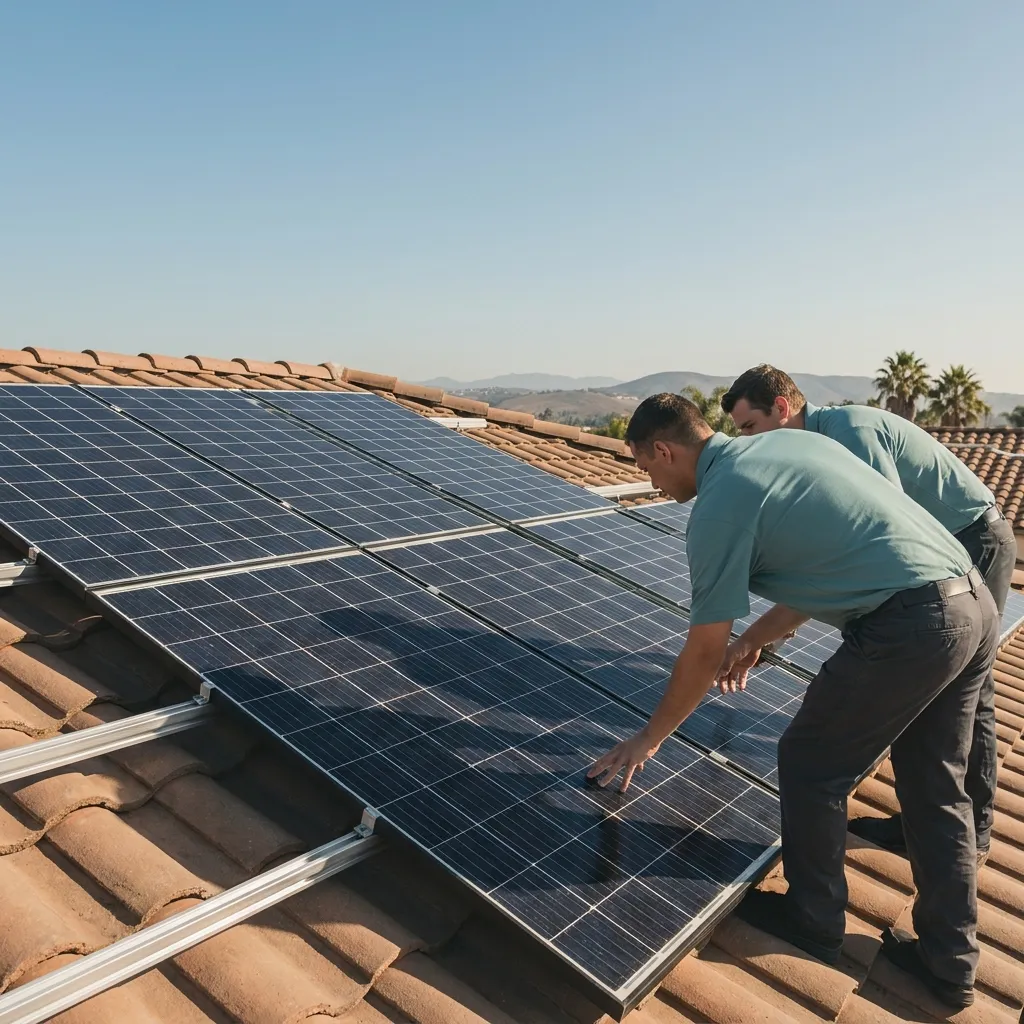
This applies any time of year: clean in the early morning or evening, never midday. Panels under full sun get hot, hot enough that cold water hitting the glass can cause micro-cracking over time. Cleaning solution also dries too fast in direct sun, leaving streaks. Early morning works well because dew has already started the softening process on surface grime. Early evening works because panels are cooling and there’s still enough light to see streaks.
The San Diego climate data from NOAA shows that even in summer, morning temperatures along the coast stay mild well past sunrise, another reason early morning is the preferred window for coastal properties.
How often should you clean, by situation
One annual clean in late spring is the right baseline for most inland San Diego homes. Two cleanings per year, late spring and late fall, is the right baseline for most homes across the county and matches what most solar maintenance plans provide. Quarterly cleaning fits coastal properties within a mile or two of the water, homes near dirt roads or heavy construction, or any system where monitoring data shows persistent production gaps.
A review of soiling loss data from NREL’s PVWatts and field studies confirms that California’s coastal and inland valley climates both see meaningful soiling losses, with coastal marine layer adding a distinct accumulation pattern on top of standard dust.
The timing question, answered simply
Clean once in late May or early June. Add a second cleaning in late October or November if you want semi-annual coverage or if wildfire season was active. Add more if you’re on the coast or near a heavy-soil source. Check your monitoring data between cleanings, it will tell you when the panels are underperforming.
Everything else, the marketing language about “maximum efficiency” and “peak output”, comes back to this simple calendar reality: San Diego’s dry season is long, expensive dirty panels are at their most costly in summer, and ash events are unpredictable. Clean before summer, clean after fire season, and watch your numbers.
When to call us
If you’re not sure where your panels fall on that spectrum, we can take a look. We serve all of San Diego County and can assess soiling level, recommend a cleaning schedule, and handle the work in a single visit. Reach out to learn about our solar maintenance plan options or to book a one-time cleaning.
Call us at (858) 925-5546 for a free quote.
Related reading: How often should you clean solar panels in San Diego | Wildfire ash on solar panels: what to do | What a solar panel maintenance plan includes